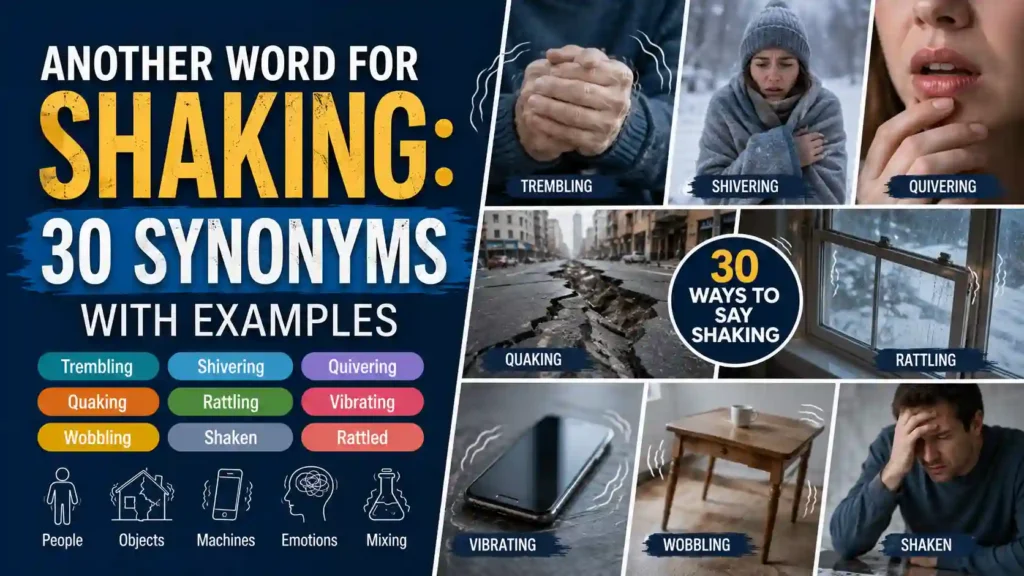
The closest everyday alternatives to “shaking” are trembling, shivering, and quivering. They describe a body or voice moving in small, quick, uncontrollable ways. For objects, the ground, or buildings, rattling, vibrating, and rocking often fit better.
The best word depends on what is moving and why. Cold, fear, illness, anger, an earthquake, and a bottle of juice all involve shaking, but each calls for a different word. The word can also describe feelings, as in “shaken” or “rattled.”
Quick list: trembling, shivering, quivering, quaking, shuddering, rattling, vibrating, wobbling, shaken, rattled
This article looks at 30 alternatives with meanings, IPA pronunciation, usage notes, examples, and context. Some are direct synonyms and others are related words that fit only certain situations.
At a Glance: Shaking Synonyms and Related Alternatives
| Alternative | Part of Speech | Meaning | Register / Tone | Ideal Context |
| Trembling | Adjective / verb form | Shaking slightly, often from fear, weakness, or emotion | Neutral | People, hands, voices |
| Shivering | Adjective / verb form | Shaking from cold or fear | Neutral, everyday | Cold weather, fever, fright |
| Quivering | Adjective / verb form | Shaking with fast, small movements | Neutral to literary | Lips, voices, leaves |
| Quaking | Adjective / verb form | Shaking strongly, often from fear or force | Neutral to dramatic | Fear, earthquakes |
| Shuddering | Adjective / verb form | Shaking suddenly because of disgust or fear | Neutral | Strong, sudden reactions |
| Rattling | Adjective / verb form | Shaking with a knocking sound | Informal to neutral | Windows, pipes, loose parts |
| Vibrating | Adjective / verb form | Moving rapidly back and forth | Neutral to technical | Machines, phones, sound |
| Wobbling | Adjective / verb form | Moving unsteadily from side to side | Informal | Tables, wheels, unsteady objects |
| Shaken | Adjective | Upset or frightened by an event | Neutral | Emotional reactions |
| Rattled | Adjective | Nervous or disturbed | Informal | Stress, pressure |
Which Word Should You Use?
| If you want to… | Use | Why |
| Describe someone cold | Shivering | It is the standard word for shaking from cold. |
| Describe a nervous hand or voice | Trembling | It suits human weakness and emotion. |
| Describe a quick, light movement | Quivering | It suggests small, fast motion. |
| Describe a sudden, disgusted reaction | Shuddering | It implies a single strong shake. |
| Describe a machine or phone | Vibrating | It is the neutral, technical choice. |
| Describe an unsteady table or wheel | Wobbling | It suggests an unstable base. |
| Describe someone emotionally upset | Shaken | It focuses on feelings, not movement. |
| Describe a formal or literary tone | Tremulous | It is gentle and expressive. |
Exploring the Multiple Meanings of “Shaking”
1. Moving Back and Forth
- Meaning: Moving quickly in one direction and then the other.
- Explanation: This is the basic physical sense. It applies to objects, body parts, and substances.
- Example: The shaking of the old bridge worried the engineers.
2. Trembling From Cold, Illness, or Fear
- Meaning: Having small, uncontrollable body movements.
- Explanation: Here the cause is the body’s reaction to cold, fever, weakness, or fear. Shivering and trembling are the closest alternatives.
- Example: She was shaking with cold when she came inside.
3. Vibration or Ground Movement
- Meaning: Rapid movement caused by force, sound, or an earthquake.
- Explanation: The shaking happens to the object or ground, and nobody is controlling it. Vibrating and rattling often fit.
- Example: The shaking of the ground woke everyone in the house.
4. Emotional Upset
- Meaning: Feeling disturbed, frightened, or deeply affected.
- Explanation: The word is used figuratively here, usually as “shaken.” The movement is in the person’s confidence or calm.
- Example: He was badly shaken by the news.
5. Brandishing or Waving
- Meaning: Moving something in the air, often to show feeling or send a signal.
- Explanation: This sense involves deliberate action, such as shaking a fist or head.
- Example: She stood at the door shaking her fist.
6. Mixing or Agitating a Substance
- Meaning: Moving a container or liquid to mix it.
- Explanation: This sense is intentional and practical, as with a bottle or a cocktail.
- Example: Shaking the bottle before use helps mix the medicine.
Sources: Merriam-Webster; Collins English Dictionary; Dictionary.com.
Analyzing 30 Shaking Alternatives in Detail
Some of these words are direct synonyms of “shaking,” while others are related alternatives that fit only certain contexts, and the usage notes say which.
Group 1: Core Everyday Synonyms
1. Trembling
IPA: (US and UK) /ˈtrɛmblɪŋ/
Definition: Shaking slightly and uncontrollably, often from fear, weakness, or strong emotion.
- Usage: A close synonym for shaking in people. Neutral in tone and common in both speech and writing.
- Example: Her hands were trembling as she opened the letter.
2. Shivering
IPA: (US and UK) /ˈʃɪvərɪŋ/
Definition: Shaking slightly with cold, fear, or excitement.
- Usage: A direct synonym when the cause is cold or fever. It is less suitable for objects.
- Example: The children stood shivering in the snow.
3. Quivering
IPA: (US and UK) /ˈkwɪvərɪŋ/
Definition: Shaking with small, rapid movements.
- Usage: A close synonym that suggests lighter, quicker movement than trembling. Often used for lips, voices, or leaves.
- Example: Her lip was quivering, but she did not cry.
4. Quaking
IPA: (US and UK) /ˈkweɪkɪŋ/
Definition: Shaking strongly, especially from fear or because of a powerful force.
- Usage: A stronger, more dramatic synonym. It can describe a person or the ground.
- Example: He stood quaking in front of the angry crowd.
5. Shuddering
IPA: (US and UK) /ˈʃʌdərɪŋ/
Definition: Shaking suddenly and strongly, often from fear or disgust.
- Usage: A close synonym for one sharp reaction rather than steady shaking. It can also describe machines.
- Example: She was shuddering at the thought of going back.
6. Shaky
IPA: (US and UK) /ˈʃeɪki/
Definition: Unsteady or trembling, especially from weakness or nervousness.
- Usage: A common everyday adjective for a voice, hand, or start. It can also mean “not secure,” as in a shaky plan.
- Example: His voice was shaky when he began to speak.
Group 2: Back-and-Forth Movement
7. Rattling
IPA: (US and UK) /ˈrætlɪŋ/
Definition: Making short, sharp knocking sounds while shaking.
- Usage: A related alternative. It suits loose or hard objects and always suggests noise.
- Example: The rattling windows told us the storm had arrived.
8. Jolting
IPA: US /ˈdʒoʊltɪŋ/ · UK /ˈdʒəʊltɪŋ/
Definition: Moving suddenly and roughly.
- Usage: A related alternative that stresses sharp, bumpy movement rather than steady shaking. Common with vehicles.
- Example: The jolting bus made it hard to read.
9. Jiggling
IPA: (US and UK) /ˈdʒɪɡlɪŋ/
Definition: Moving up and down or from side to side in small, quick movements.
- Usage: A related alternative with a light, casual tone. It sounds less serious than trembling.
- Example: He kept jiggling his keys while he waited.
10. Swaying
IPA: (US and UK) /ˈsweɪɪŋ/
Definition: Moving slowly from side to side.
- Usage: A related alternative that describes slow, smooth motion. It is not a good match for fast shaking.
- Example: The tall trees were swaying in the wind.
11. Rocking
IPA: US /ˈrɑːkɪŋ/ · UK /ˈrɒkɪŋ/
Definition: Moving gently back and forth or from side to side.
- Usage: A related alternative that suggests larger, steadier movement. It can also describe a building or boat hit by force.
- Example: The explosion left the whole street rocking.
12. Wobbling
IPA: US /ˈwɑːblɪŋ/ · UK /ˈwɒblɪŋ/
Definition: Moving unsteadily from side to side.
- Usage: A related alternative for objects that are not balanced. It is informal and rarely used for fear or emotion.
- Example: The wobbling table made the coffee spill.
Group 3: Vibration and Rapid Motion
13. Vibrating
IPA: US /ˈvaɪbreɪtɪŋ/ · UK /vaɪˈbreɪtɪŋ/
Definition: Moving back and forth very quickly with small movements.
- Usage: A close synonym for physical shaking in machines, phones, and strings. It sounds neutral and technical.
- Example: My phone kept vibrating on the desk.
14. Juddering
IPA: (US and UK) /ˈdʒʌdərɪŋ/
Definition: Shaking violently and unevenly, especially while moving.
- Usage: A related alternative, more common in British English. It suits engines and vehicles.
- Example: The old car came juddering to a stop.
15. Oscillating
IPA: US /ˈɑːsɪleɪtɪŋ/ · UK /ˈɒsɪleɪtɪŋ/
Definition: Moving regularly back and forth between two points.
- Usage: A formal, technical alternative. It describes steady, repeated motion and is not used for human emotion.
- Example: The oscillating fan cooled the whole room.
16. Quavering
IPA: (US and UK) /ˈkweɪvərɪŋ/
Definition: Shaking, especially when describing the voice.
- Usage: A related alternative used almost only for voices or sounds. It does not describe the whole body.
- Example: Her quavering voice showed how nervous she was.
17. Twitching
IPA: (US and UK) /ˈtwɪtʃɪŋ/
Definition: Making small, sudden movements that are not controlled.
- Usage: A related alternative for brief jerks of a muscle, eyelid, or animal. It is not continuous shaking.
- Example: His eye kept twitching during the exam.
18. Fluttering
IPA: (US and UK) /ˈflʌtərɪŋ/
Definition: Moving lightly and quickly, often with small wing-like motions.
- Usage: A related alternative that suggests light, delicate movement. It works for leaves, eyelids, or a nervous heart.
- Example: The flags were fluttering in the breeze.
Group 4: Emotional and Figurative Alternatives
19. Shaken
IPA: (US and UK) /ˈʃeɪkən/
Definition: Upset, shocked, or frightened.
- Usage: A figurative alternative that describes the emotional effect, not the movement.
- Example: She looked pale and shaken after the accident.
20. Rattled
IPA: (US and UK) /ˈrætld/
Definition: Made nervous, confused, or upset.
- Usage: An informal related alternative. It suggests losing calm under pressure, often briefly.
- Example: The tough question clearly rattled the speaker.
21. Unnerved
IPA: US /ʌnˈnɝːvd/ · UK /ʌnˈnɜːvd/
Definition: Made to feel afraid, anxious, or less confident.
- Usage: A related alternative that focuses on lost courage. It is stronger and more formal than rattled.
- Example: The strange noises unnerved the whole group.
22. Agitated
IPA: (US and UK) /ˈædʒɪteɪtɪd/
Definition: Anxious, restless, or upset.
- Usage: A related alternative that stresses visible restlessness. It sounds neutral to formal.
- Example: He grew more agitated as the delay continued.
23. Jittery
IPA: (US and UK) /ˈdʒɪtəri/
Definition: Nervous and unable to relax.
- Usage: An informal related alternative. It suits nervous energy, such as before a test or after too much coffee.
- Example: I feel jittery before every big meeting.
24. Unsettled
IPA: (US and UK) /ʌnˈsɛtəld/
Definition: Worried, uneasy, or disturbed.
- Usage: A related alternative that is calmer and quieter than shaken. It rarely suggests physical movement.
- Example: The sudden change left the team unsettled.
Group 5: Formal and Literary Alternatives
25. Tremulous
IPA: (US and UK) /ˈtrɛmjələs/
Definition: Shaking slightly, especially from nervousness or emotion.
- Usage: A formal, literary synonym, often used for voices, smiles, or handwriting.
- Example: She gave a tremulous smile and thanked them.
26. Convulsing
IPA: (US and UK) /kənˈvʌlsɪŋ/
Definition: Shaking violently and without control.
- Usage: A stronger related alternative used in medical or dramatic contexts. It is much more intense than ordinary shaking.
- Example: The patient was convulsing, so the nurse called for help.
27. Palpitating
IPA: (US and UK) /ˈpælpɪteɪtɪŋ/
Definition: Beating quickly or irregularly, especially of the heart.
- Usage: A limited related alternative that describes a fast, fluttering heartbeat only. It does not mean the whole body is shaking.
- Example: His palpitating heart made him sit down.
Group 6: Action-Based Alternatives
28. Brandishing
IPA: (US and UK) /ˈbrændɪʃɪŋ/
Definition: Waving something in a threatening or showy way.
- Usage: A related alternative for the sense of shaking an object in the air. It is more dramatic than waving.
- Example: He stood there brandishing a stick.
29. Waving
IPA: (US and UK) /ˈweɪvɪŋ/
Definition: Moving something back and forth in the air.
- Usage: A related alternative for the action sense, such as shaking a flag or hand. It is milder than brandishing.
- Example: The fans were waving flags outside the stadium.
30. Agitating
IPA: (US and UK) /ˈædʒɪteɪtɪŋ/
Definition: Shaking or stirring a liquid.
- Usage: A formal or technical alternative for the mixing sense. It is not the same as “agitated” for emotion.
- Example: The lab assistant was agitating the solution gently.
Sources: Merriam-Webster; Collins English Dictionary and Thesaurus; Dictionary.com.
Shaking vs. Trembling vs. Shivering vs. Shuddering
| Word | Main Cause | Type of Movement | Example |
| Shaking | Any cause | Broad, general | The whole room was shaking. |
| Trembling | Fear, weakness, emotion | Small, steady | His hands were trembling. |
| Shivering | Cold, fever, fear | Rapid, repeated | She was shivering in the wind. |
| Shuddering | Disgust, fear | Sudden, single or brief | He shuddered at the thought. |
“Shaking” is the broadest word of the four. The others narrow the cause or the type of movement, so choose the one that matches what you want the reader to picture.
Sources: Merriam-Webster; Collins English Dictionary.
Shaking and Opposite/Paired Word Pairs
| Word | Paired Word | Note |
| Shaking | Still | The most natural contrast for movement. |
| Shaking | Steady | Often used for hands and voices. |
| Shaking | Calm | Used for emotional states. |
| Shaking | Motionless | A stronger, more formal contrast. |
| Shaky | Stable | Used for tables, plans, or foundations. |
| Shaken | Composed | Contrasts emotional upset with self-control. |
“Shaking” has no single perfect opposite, so the best contrast depends on the sense.
Sources: Merriam-Webster; Collins English Thesaurus.
Common Word Partners of “Shaking”
| Pattern | Common Partners | Example |
| Shaking + with | with fear, with cold, with anger, with laughter | He was shaking with anger. |
| Shaking + body part | hands, head, legs | She stood there, her hands shaking. |
| Shaking + thing | ground, building, walls | The shaking ground scared the children. |
| Shaking + hands | shaking hands | They ended the meeting by shaking hands. |
| Shaking + head | shaking one’s head | He kept shaking his head in disbelief. |
| Shaking + off | shaking off a cold | She was still shaking off the effects of the flu. |
Sources: Collins English Dictionary; Merriam-Webster.
Idiomatic Phrases Featuring “Shaking”
These are established expressions. Only some are true idioms, and the notes say which.
1. Shaking like a leaf
- Meaning: Trembling badly, usually from fear or nerves. It is a fixed simile used as an idiom.
- Example: I was shaking like a leaf before my first speech.
2. Shaking in one’s boots
- Meaning: Being very afraid.
- Example: The students were shaking in their boots before the principal arrived.
3. Shaking things up
- Meaning: Making big changes to a routine or system.
- Example: The new manager is shaking things up in the department.
4. Shaking off
- Meaning: Getting rid of something unwanted, such as an illness or a bad feeling. This is a phrasal verb rather than an idiom.
- Example: It took her a week to shake off the cold.
Sources: Merriam-Webster; Collins English Dictionary; Dictionary.com.
Word Formation of “Shaking”
Etymology & Structure
“Shaking” is formed from the verb shake plus the ending -ing. According to Etymonline, shake comes from Old English sceacan and is related to similar words in other Germanic languages.
Date and History
The verb shake is traced to Old English, so the root is very old. Dictionaries do not give one reliable first date for “shaking” as a separate form, so no specific year is claimed here.
Word Class Variations
- Verb: shake (shakes, shook, shaken, shaking)
- Noun: shake, shaking
- Adjective: shaky, shaken
- Adverb: shakily
- Related noun: shakiness
Sources: Etymonline; Merriam-Webster.
Common Word-Choice Mistakes
Shaking from the cold: use shivering, not trembling.
A shaking table: use wobbling, not quivering.
A shaking voice: use quavering or trembling, not rattling.
A phone shaking: use vibrating, not shuddering.
A slow movement of trees: use swaying, not jolting.
A worried person: use shaken or rattled, not oscillating.
Shaking a liquid for a test: use agitating, not agitated.
Frequently Asked Questions
What is the closest synonym for shaking?
Trembling is the closest everyday synonym, especially for people and body parts.
What is another word for shaking from cold?
Shivering is the usual word.
What is the difference between trembling and quivering?
Trembling is a general word for shaking from fear or weakness. Quivering suggests smaller, quicker movements.
What is a formal alternative to shaking?
Oscillating is a formal option for regular movement. Tremulous is a formal and literary option for nervous or emotional shaking.
What is another word for a shaking voice?
Quavering and trembling both work well.
Can “shaking” describe feelings?
Yes, but usually through “shaken,” as in “She was badly shaken by the news.”
What is a word for shaking from fear?
Quaking, trembling, and shuddering all fit.
What is the opposite of shaking?
It depends on the sense. “Still” works for movement, and “calm” for emotion.
Is “rattling” the same as “shaking”?
No. Rattling includes a knocking sound, so it is a related alternative rather than an exact synonym.
What is a word for shaking a liquid?
Agitating is the technical term, and “mixing” is the everyday one.
Conclusion
The closest alternatives to “shaking” are trembling, shivering, quivering, and quaking. For objects and machines, vibrating, rattling, and wobbling fit better. For feelings, shaken, rattled, and unnerved are the usual choices.
The right word depends on context. Ask what is moving, how fast it moves, and why. Cold points to shivering, fear to trembling or quaking, and a loose object to rattling or wobbling.
Matching the word to the cause and type of movement makes writing clearer and more natural.

Hi, I’m Anam, a dedicated writer and curious researcher who believes learning should be simple, useful, and enjoyable. At VistoraDaily, I explore general knowledge, everyday questions, fascinating facts, and helpful information, creating clear content that inspires readers to discover something new.